

Close Menu
  • Home
  • Articles
    • Attacks
      • BEC
      • Data Breach
      • DDoS
      • Evasion Attacks
      • Injection
      • Malware
      • MITM
      • Phishing
      • Ransomware
      • RCE
      • Social Engineering
      • Spoofing
      • Spyware
    • Business and Policy
      • BCP and DRP
      • GRC
      • Regulations
    • Data Protection
      • DLP
      • DRM
      • Encryption
      • IAM
    • Future, Trends and Insight
      • AI
      • Events & Community
      • Emerging Tech
      • Expert Panel
      • Interviews With Experts
      • Insights
      • Study & Research
    • Resources
      • Guides
      • Tools
      • Training & Education
    • Security
      • API
      • Apps
      • Cloud
      • Critical Infrastructure
      • Endpoint
      • Hardware
      • IoT
      • Mobile
      • Network
      • OT
      • Port Security
      • Security Architecture
      • Software Development
      • Supply Chain
      • Zero Trust
    • Threats and Vulnerabilities
      • Emerging Threats
      • Insider Threats
      • Risk Management
      • Threat Intelligence
      • Zero Day
  • News and Exclusives
    • Latest News
    • ISB Exclusive
    • Positive News
  • Who We Are
    • About Us
    • Information Security Buzz Expert Panel​
    • Write for Us
    • Media Pack
  • Contact Us
  • Newsletter
Facebook X (Twitter) LinkedIn
Information Security BuzzInformation Security Buzz
  • Home
  • Articles
    • Attacks
      • BEC
      • Data Breach
      • DDoS
      • Evasion Attacks
      • Injection
      • Malware
      • MITM
      • Phishing
      • Ransomware
      • RCE
      • Social Engineering
      • Spoofing
      • Spyware
    • Business and Policy
      • BCP and DRP
      • GRC
      • Regulations
    • Data Protection
      • DLP
      • DRM
      • Encryption
      • IAM
    • Future, Trends and Insight
      • AI
      • Events & Community
      • Emerging Tech
      • Expert Panel
      • Interviews With Experts
      • Insights
      • Study & Research
    • Resources
      • Guides
      • Tools
      • Training & Education
    • Security
      • API
      • Apps
      • Cloud
      • Critical Infrastructure
      • Endpoint
      • Hardware
      • IoT
      • Mobile
      • Network
      • OT
      • Port Security
      • Security Architecture
      • Software Development
      • Supply Chain
      • Zero Trust
    • Threats and Vulnerabilities
      • Emerging Threats
      • Insider Threats
      • Risk Management
      • Threat Intelligence
      • Zero Day
  • News and Exclusives
    • Latest News
    • ISB Exclusive
    • Positive News
  • Who We Are
    • About Us
    • Information Security Buzz Expert Panel​
    • Write for Us
    • Media Pack
  • Contact Us
  • Newsletter
Subscribe
Information Security BuzzInformation Security Buzz
Home - Articles - How Secure Is Your Data Storage?
Articles

How Secure Is Your Data Storage?

ISBuzz TeamBy ISBuzz TeamJanuary 20, 2014Updated:July 3, 20245 Mins Read
Share LinkedIn Twitter Facebook Copy Link Email
Secure Data
Share
Facebook Twitter LinkedIn Email Copy Link
Quick AI Summary
ChatGPTClaudeGeminiGrokPerplexityDeepSeekCopilot

With all of the NSA, RSA and related security information privacy concerns in the news tied to if your computer systems or networks can be eves-dropped, what about your data storage?

Are you protected your data and information, along with the data storage that they reside on secure with encryption of data at rest?

If yours is like many organization to stay out of the news you might be encrypting your data protection copies for backup, business continuance (BC), disaster recovery (DR) or archive copies that go off-site on magnetic tape (or some other medium).

However what if your organization has moved beyond using tape instead leveraging hard disk drives (HDDs), nand flash solid state devices (SSD) or sending data to a cloud or managed service provider (MSP)?

For the latter, are those media/mediums also being encrypted, or has your environment fallen under the false sense of security that only magnetic tapes need to be encrypted?

I continue to find people or organizations that are under the belief that you only need to encrypt data in-flight (e.g. going to or from off-site or a cloud) or that is physically being transported somewhere else.

Likewise while the trend is improving, however there are still far too many laptops, tablets, workstations, PCs and other devices that do not have their HDD or SSDs encrypted, yet amazingly there are far more of these devices lost, stolen, forgotten on a daily basis vs. the headline news making occurrence of a magnetic tape being lost. The irony is that my experience has shown it is far easier to read a typical HDD or SSD than a magnetic tape, as most people do not have tape drives around.

Otoh take a PC, laptop, tablet or other device and it is relatively easy to get the drive out, access and use it.

The usual belief is that information behind firewalls and on storage attached to servers that have rights access control and identify access, all is safe; hence no need to encrypt the actual storage device.

There is a couple of other usual comments or statements that people make to me about encrypting storage devices which is that it is too difficult due to lack of good key management, and the other is that people say the encryption algorithms are no good. Both can be valid points, particular given what we are hearing with the NSA and other government activities. My usual response is a) have spare keys placed in safe trusted locations and b) do you lock the doors and windows on your home as somebody who really wants to get in probably can, hence need for multiple rings of security, however the encryption will deter the casual or more typical adversary.

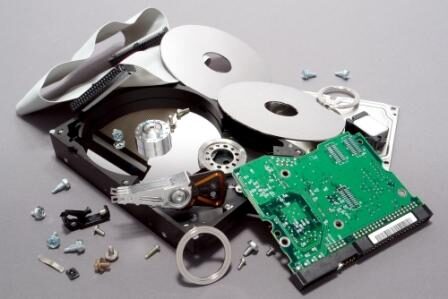
Where can the storage encryption be done? Several places including via applications such as databases (Oracle, SQLserver, etc), email systems such as Exchange among others, as well as via file systems, operating systems such as Windows bit locker or third party products such TrueCrypt among many others. Most reputable backup/restore, archive and data protection or copy tools also support some form of encryption.

Encryption can also be done via appliances that sit between your server and storage systems, or storage systems, not to mention storage systems and appliances also being able to perform the encryption via software or hardware for local or even cloud access. Finally, there are self-encrypting devices (SEDs) some of which implement the OPAL standard that as their names imply, encrypt themselves with a key entrusted to a server, appliance or storage system.
Storage


For those environments that do not need encryption, there is an interesting by product of using SEDs or storage systems that have built-in encryption which is the ability to drop or destroy the keys, and depending on implementation, the drives can be instantly be effectively secure erased (to different security standard levels of course). Check with your storage system and device vendors or providers to see what they support along with the relevant standards and capabilities, as there are differences to meet various threat risks.

Walking the talk, yes, I have encryption enabled on laptops, removable and portable storage devise as well as on-site, and not to mention encrypting local backups, as well as copies sent to cloud.

There are many other server, storage I/O data protection and security topics spanning cloud, virtual and physical environments we can and will discuss in the future.

Ok, nuff said (for now).

About the author

Greg Schulz is Founder and Sr. Analyst of independent IT advisory and consultancy firm Server and StorageIO (StorageIO). He has worked in IT at an electrical utility, financial services and transportation firms in roles ranging from business applications development to systems management and architecture planning. Mr. Schulz is author of the Intel Recommended Reading List books “Cloud and Virtual Data Storage Networking” and “The Green and Virtual Data Center” via CRC Press and “Resilient Storage Networks” (Elsevier) and a four time VMware vExpert. Learn more at www.storageio.com

ISBuzz Team
  • ISBuzz Team
    Air Canada Data Breach: BianLian Extortion Group Claims A Massive Heist Contrary To Airline’s Earlier Statement
  • ISBuzz Team
    Unprecedented DDoS Attack Rocks The Web: Tech Giants Reveal A Digital Tsunami
  • ISBuzz Team
    CISA Flags High-Severity Adobe Acrobat Reader Flaw Amid Active Exploits
  • ISBuzz Team
    Curl Security Alert: Patching A Critical Bug Averting Potential Cyber Catastrophe

The opinions expressed in this post belong to the individual contributors and do not necessarily reflect the views of Information Security Buzz.

Share. Facebook Twitter LinkedIn Email Copy Link

Related Posts

Visual data is the blind spot in enterprise security: that’s about to change

May 4, 20267 Mins Read

Making stolen data worthless: why security must start with the data

March 30, 20265 Mins Read

Meta’s Smart Glasses Privacy Scandal Expands After Sama Credentials Found on the Dark Web

March 10, 20264 Mins Read
ISB-Bora-Side-Bar

 
ISB-Bora-Side-Bar
Black ISB Logo

Information Security Buzz is an independent resource that provides the experts’ comments, analysis, and opinion on the latest Cybersecurity news and topics

X (Twitter) LinkedIn Facebook RSS

Working With Us

  • About Us
  • Advertise With Us
  • Contact Us

Write For Us

  • How To Contribute

The Pages

  • Privacy Policy
  • Cookie Policy
  • AI Policy
  • Terms & Conditions
  • Copyright Notice

Information Security Buzz and all its contents are copyright © 2014-2025. All rights reserved. All third-party trademarks are recognized.

Type above and press Enter to search. Press Esc to cancel.

Manage Consent
To provide the best experiences, we use technologies like cookies to store and/or access device information. Consenting to these technologies will allow us to process data such as browsing behavior or unique IDs on this site. Not consenting or withdrawing consent, may adversely affect certain features and functions.
Functional Always active
The technical storage or access is strictly necessary for the legitimate purpose of enabling the use of a specific service explicitly requested by the subscriber or user, or for the sole purpose of carrying out the transmission of a communication over an electronic communications network.
Preferences
The technical storage or access is necessary for the legitimate purpose of storing preferences that are not requested by the subscriber or user.
Statistics
The technical storage or access that is used exclusively for statistical purposes. The technical storage or access that is used exclusively for anonymous statistical purposes. Without a subpoena, voluntary compliance on the part of your Internet Service Provider, or additional records from a third party, information stored or retrieved for this purpose alone cannot usually be used to identify you.
Marketing
The technical storage or access is required to create user profiles to send advertising, or to track the user on a website or across several websites for similar marketing purposes.
  • Manage options
  • Manage services
  • Manage {vendor_count} vendors
  • Read more about these purposes
View preferences
  • {title}
  • {title}
  • {title}