

Close Menu
  • Home
  • Articles
    • Attacks
      • BEC
      • Data Breach
      • DDoS
      • Evasion Attacks
      • Injection
      • Malware
      • MITM
      • Phishing
      • Ransomware
      • RCE
      • Social Engineering
      • Spoofing
      • Spyware
    • Business and Policy
      • BCP and DRP
      • GRC
      • Regulations
    • Data Protection
      • DLP
      • DRM
      • Encryption
      • IAM
    • Future, Trends and Insight
      • AI
      • Events & Community
      • Emerging Tech
      • Expert Panel
      • Interviews With Experts
      • Insights
      • Study & Research
    • Resources
      • Guides
      • Tools
      • Training & Education
    • Security
      • API
      • Apps
      • Cloud
      • Critical Infrastructure
      • Endpoint
      • Hardware
      • IoT
      • Mobile
      • Network
      • OT
      • Port Security
      • Security Architecture
      • Software Development
      • Supply Chain
      • Zero Trust
    • Threats and Vulnerabilities
      • Emerging Threats
      • Insider Threats
      • Risk Management
      • Threat Intelligence
      • Zero Day
  • News and Exclusives
    • Latest News
    • ISB Exclusive
    • Positive News
  • Who We Are
    • About Us
    • Information Security Buzz Expert Panel​
    • Write for Us
    • Media Pack
  • Contact Us
  • Newsletter
Facebook X (Twitter) LinkedIn
Information Security BuzzInformation Security Buzz
  • Home
  • Articles
    • Attacks
      • BEC
      • Data Breach
      • DDoS
      • Evasion Attacks
      • Injection
      • Malware
      • MITM
      • Phishing
      • Ransomware
      • RCE
      • Social Engineering
      • Spoofing
      • Spyware
    • Business and Policy
      • BCP and DRP
      • GRC
      • Regulations
    • Data Protection
      • DLP
      • DRM
      • Encryption
      • IAM
    • Future, Trends and Insight
      • AI
      • Events & Community
      • Emerging Tech
      • Expert Panel
      • Interviews With Experts
      • Insights
      • Study & Research
    • Resources
      • Guides
      • Tools
      • Training & Education
    • Security
      • API
      • Apps
      • Cloud
      • Critical Infrastructure
      • Endpoint
      • Hardware
      • IoT
      • Mobile
      • Network
      • OT
      • Port Security
      • Security Architecture
      • Software Development
      • Supply Chain
      • Zero Trust
    • Threats and Vulnerabilities
      • Emerging Threats
      • Insider Threats
      • Risk Management
      • Threat Intelligence
      • Zero Day
  • News and Exclusives
    • Latest News
    • ISB Exclusive
    • Positive News
  • Who We Are
    • About Us
    • Information Security Buzz Expert Panel​
    • Write for Us
    • Media Pack
  • Contact Us
  • Newsletter
Subscribe
Information Security BuzzInformation Security Buzz
Home - News & Analysis - 38 Days of DDoS — Behemoth’s Graduation Moment
News & Analysis

38 Days of DDoS — Behemoth’s Graduation Moment

ISBuzz TeamBy ISBuzz TeamAugust 20, 2014Updated:August 20, 20144 Mins Read
Share LinkedIn Twitter Facebook Copy Link Email
ddos
Share
Facebook Twitter LinkedIn Email Copy Link
Quick AI Summary
ChatGPTClaudeGeminiGrokPerplexityDeepSeekCopilot

Not even one month after Incapsula announced our new DNS and infrastructure protection services, our new ’Behemoth‘ scrubbers were put to the test – mitigating a massive, multi-vector DDoS attack, peaking at 110+ Gbps and 90+ million packets per second.

Like the proud parents we are, we couldn’t help but brag about our success on Facebook and Twitter. Our story caught the attention of Mohit Kumar, founder and editor-in-chief of The Hacker News (THN), who shot us an email with some questions. In response we told him it appeared the attack “wasn’t going to stop any time soon”.

FREE ebook: What Is The Security Industry´s Dirty Little Secret

In retrospect, this turned out to be a serious understatement.
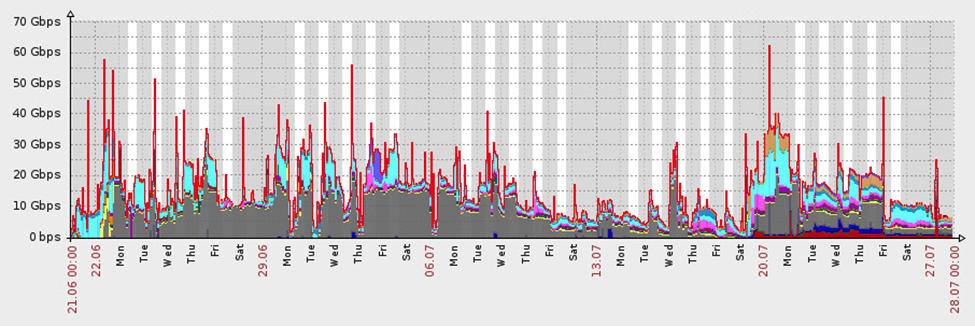
ddos_researchDDoS traffic generated by DNS and SYN floods over the course of the attack.

The DDoS attack continued to rumble on days after the story appeared in THN magazine. Its presence became a regular fixture of our daily routine to the point where we started second-guessing traffic reports which didn’t include a few tens of millions of filtered-out DDoS packets.

During this time we saw the offenders throwing everything they had at us. They tried everything from massive network layer DDoS attacks to focused application layer (HTTP) floods, followed by dozens of SQLI and XSS attempts – all foiled by Incapsula’s Web Application Firewall.

Typically, the perpetrators were simultaneously using at least two of these attack vectors. It was not uncommon to see them turning up the heat with “all guns blazing” five-vector attacks.

At all times, they continued to use extremely large DNS floods, usually comprising several tens of millions requests per second. Often these were accompanied by large SYN floods, also aimed at Incapsula DNS infrastructure.

It should be noted that, in the last few months, we have mitigated many more of these massive DNS floods, which are quickly becoming the new weapon of choice for DDoS offenders.

38 Days and 50 Petabits of DDoS

The DDoS attack lasted 38 days, during which Incapsula’s scrubbing servers filtered out 50+ petabits (51,000+ terabits) of malicious traffic.

Interestingly, while the offenders did switch between several targets, they consistently targeted the websites of one Incapsula client – a video game company that onboarded Incapsula services on the eve of the attack.

Clearly, this organization was the real target. Combined with the extreme determination of the attackers, one can surmise that the DDoS attack was the result of a business feud. The goal: nothing short of a complete takedown of this online business.

Pareto’s Law – 80% of DDoS Traffic From 20% IPs

The ‘business feud’ theory is reinforced by the resources used during the attack. Looking at source IP data, Incapsula noticed the majority of malicious packets were originating from the same IP ranges. We knew that 20% of C-classes are typically responsible for ~80% of all DDoS traffic.

In other words, we detected offenders who had continuous access to several very powerful network resources. These were strong and reliable enough to sustain a month-long offensive—while also generating 90+ Gbps of unamplified DDoS traffic.

This is a long way off from what you would expect from an off-the-shelf botnet for hire. The perpetrators weren’t script kiddies looking to make a quick buck with a 20 Gbps DDoS attack and a $300 ransom note.

Whoever they were, they were DDoSing for a living.

Just In Time for Graduation

As previously mentioned, the attack started shortly after Incapsula rolled out our new ‘Behemoth’ scrubbing servers. While these new mega-scrubbers were deployed after a month of internal tests, this DDoS event was their true “rite of passage”.

During the weeks of the attack, an observer only had to look at the satisfied smiles of Incapsula’s team to see that we couldn’t have asked for a better final exam.

About Incapsula

Incapsula_logoIncapsula’s cloud-based Application Delivery service enables businesses to simplify their IT operations and reduce costs by consolidating multiple appliances and services into a single cloud solution. Enterprises get best-of-breed security, load balancing, failover and a global CDN, without having to deploy, manage and integrate separate products.

ISBuzz Team
  • ISBuzz Team
    Air Canada Data Breach: BianLian Extortion Group Claims A Massive Heist Contrary To Airline’s Earlier Statement
  • ISBuzz Team
    Unprecedented DDoS Attack Rocks The Web: Tech Giants Reveal A Digital Tsunami
  • ISBuzz Team
    CISA Flags High-Severity Adobe Acrobat Reader Flaw Amid Active Exploits
  • ISBuzz Team
    Curl Security Alert: Patching A Critical Bug Averting Potential Cyber Catastrophe

The opinions expressed in this post belong to the individual contributors and do not necessarily reflect the views of Information Security Buzz.

Share. Facebook Twitter LinkedIn Email Copy Link

Related Posts

The Real Cost of Inconsistent Third-Party Access

December 18, 20255 Mins Read

How to Protect Your VoIP System from DDoS Attacks

September 9, 20258 Mins Read

What Happens When Devices Cross Borders? The Role of Geofencing in Global IT

August 7, 20256 Mins Read
ISB-Bora-Side-Bar

 
ISB-Bora-Side-Bar
Black ISB Logo

Information Security Buzz is an independent resource that provides the experts’ comments, analysis, and opinion on the latest Cybersecurity news and topics

X (Twitter) LinkedIn Facebook RSS

Working With Us

  • About Us
  • Advertise With Us
  • Contact Us

Write For Us

  • How To Contribute

The Pages

  • Privacy Policy
  • Cookie Policy
  • AI Policy
  • Terms & Conditions
  • Copyright Notice

Information Security Buzz and all its contents are copyright © 2014-2025. All rights reserved. All third-party trademarks are recognized.

Type above and press Enter to search. Press Esc to cancel.

Manage Consent
To provide the best experiences, we use technologies like cookies to store and/or access device information. Consenting to these technologies will allow us to process data such as browsing behavior or unique IDs on this site. Not consenting or withdrawing consent, may adversely affect certain features and functions.
Functional Always active
The technical storage or access is strictly necessary for the legitimate purpose of enabling the use of a specific service explicitly requested by the subscriber or user, or for the sole purpose of carrying out the transmission of a communication over an electronic communications network.
Preferences
The technical storage or access is necessary for the legitimate purpose of storing preferences that are not requested by the subscriber or user.
Statistics
The technical storage or access that is used exclusively for statistical purposes. The technical storage or access that is used exclusively for anonymous statistical purposes. Without a subpoena, voluntary compliance on the part of your Internet Service Provider, or additional records from a third party, information stored or retrieved for this purpose alone cannot usually be used to identify you.
Marketing
The technical storage or access is required to create user profiles to send advertising, or to track the user on a website or across several websites for similar marketing purposes.
  • Manage options
  • Manage services
  • Manage {vendor_count} vendors
  • Read more about these purposes
View preferences
  • {title}
  • {title}
  • {title}